



0

Your Cart is Empty

Taking the Trail Less Travelled

September 07, 2026 7 min read

Taking the Trail Less Travelled

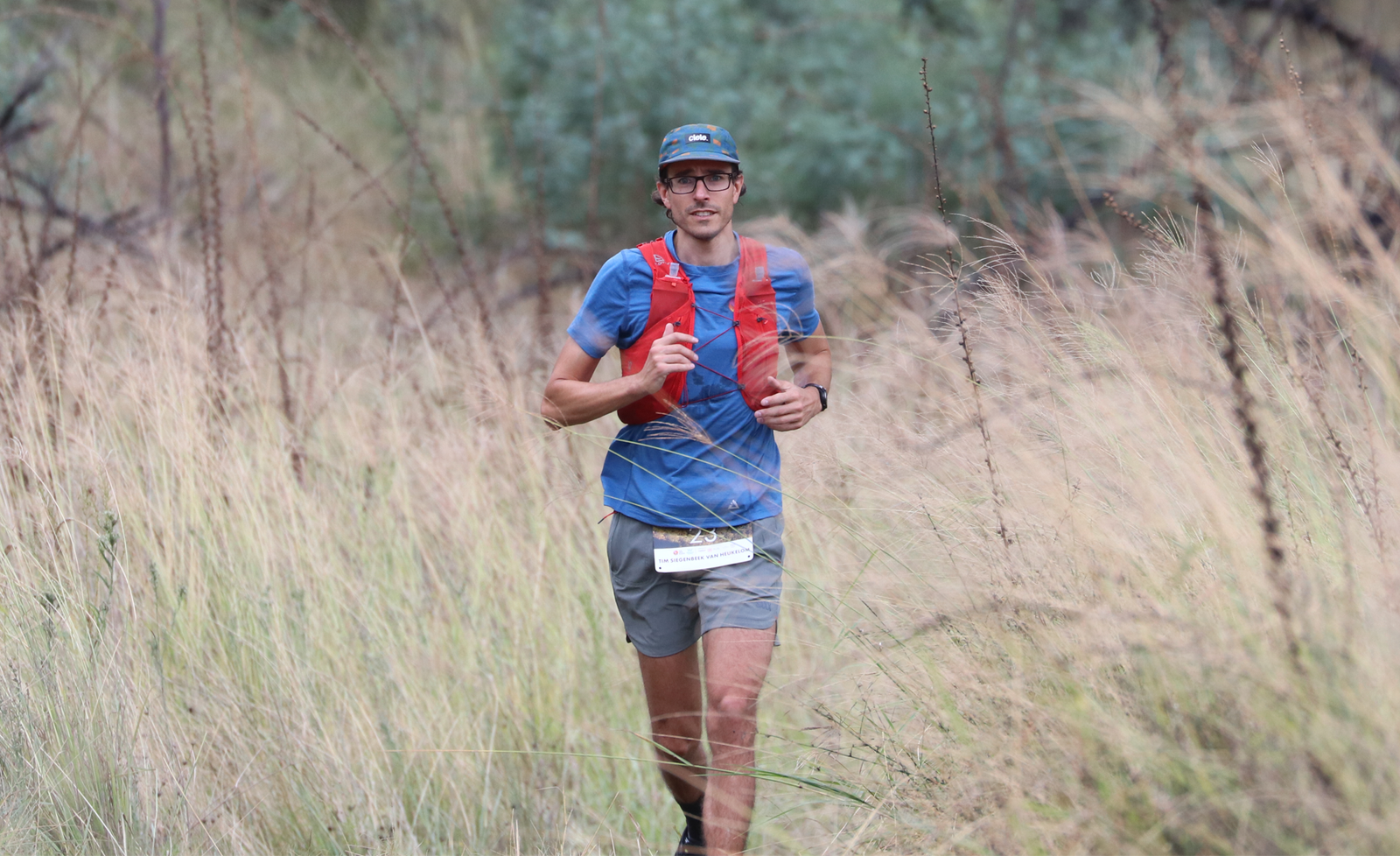
How one Sunday morning run led Tim Siegenbeek van Heukelom to co-found For Wild Places

The first time Tim Siegenbeek van Heukelom stood on Broker’s Nose overlooking the Illawarra coastline, he realised he had been running in the wrong places for years.

Until then, running had mostly meant kilometres on Sydney roads. He had moved to the Illawarra in 2018 with his family, drawn by the promise of a different lifestyle: more space, more nature, bushland, beaches, and a little more room for his children to grow up closer to the outdoors.


Not long after arriving, a friend invited him to join the Seacliff Coasters for one of their Sunday morning social runs. That first outing took him up to Broker’s Nose, one of the most spectacular viewpoints on the Illawarra Escarpment.

“I remember standing there and thinking, why have I spent all these years running on roads?” Tim says. “I was sold on the spot.”

Trail running changed the way he experienced running. It became less about pace, distance and numbers, and more about place. The trails offered a different rhythm, one shaped by sandstone, rainforest, escarpment views, ocean air and the slow discovery of landscapes he had never really noticed before. His ideal day outdoors still reflects that combination: an early solo trail run, preferably one-way, ending with his family waiting somewhere near the beach for breakfast at a pavilion.

Around the same time, Tim discovered ioMerino. The Seacliff Coasters were organising a group order of running shirts, so he looked up the brand behind them. The appeal was immediate. “I remember thinking, wow, that’s what I need,” he says. “Natural fibres, Australian wool, avoiding plastic where I can, and a product that felt like it aligned with the way I wanted to live.”


A few weeks later, local running legend Mat Wall-Smith handed him his first black ioMerino Ultra Tee at a local Parkrun. Tim jokes that he has “never taken it off,” but the truth is not far off. He still wears that original Seacliff Coasters shirt, along with a blue For Wild Places Ultra Tee, years later. The logos are now cracked and worn, but for Tim that only adds to their value.

“People sometimes say merino doesn’t last, but if you’re not ripping it through the bush, it really does. Some of my shirts are more than five years old, and they’re still going. I love the feel on skin, the fact you can wear them year-round without getting too hot or too cold, and of course the lack of smell after long runs. But above all, I love that they’re natural fibres.”

That preference is not separate from the rest of his life. Tim works professionally in sustainability, and while he does not see a straight line between his day job and his trail running, he recognises the same instinct in both. “Internally, I think I’m always striving for a more responsible, sustainable and liveable future for the next generations,” he says. “That shows up in my work, but also in personal choices: food, materials, avoiding plastic where I can, responsible banking and super, buying quality that lasts rather than cheap throwaway products, and supporting companies that are B Corp or part of 1% for the Planet.”


It is also why ioMerino’s idea of the “Outsider” resonates with him. For Tim, being an outsider is not only about physically going outside, although that matters. It is about a way of seeing and acting in the world.

“Outsiders are people who literally go outside and connect with nature and community,” he says. “But they’re also people who dare to step outside the norm. People who speak up, take climate action, set an example, and make connections between other outsiders. I like to think outsiders show insiders what the world could be like. They step into the arena and give having a lasting impact a shot.”

For Tim, the moment running became something more than running came in two stages.

The first was UTA50 in 2019, an event he loved, but which left him with a lingering question. He had just run through one of the most extraordinary landscapes in Australia, yet the event itself did not seem deeply connected to protecting that landscape.
“It almost felt like the event just happened to be in the Blue Mountains,” he says. “The running was incredible, but I couldn’t shake the feeling that there was a missed opportunity. We were all there because the place was beautiful, but where was the connection to caring for it?”


Not long afterwards, he read about takayna trails in a running magazine. The event, founded by Simon Harris, was built around a simple but powerful idea. The Bob Brown Foundation was working to protect takayna / the Tarkine rainforest in north-west Tasmania, and Simon saw that trail runners could become a new audience for that work. Bring them to the forest, show them what was at stake, and give them a way to raise funds and awareness through doing what they already loved.

“When I read about takayna, I knew immediately that this was exactly what I wanted, and what I felt the world needed,” Tim says. “It was trail running, but with a cause and with impact. I hunted Simon down to make sure he was organising it again, and to make sure I could sign up. I think I might have been the first person to register.”

He ran takayna Ultra in 2020, and the experience became a turning point. It showed him that trail running could do more than take people through beautiful places. It could introduce them to landscapes under threat, connect them with communities already fighting to protect those places, and create a practical pathway for action. It was at takayna that Tim met the group of people who would go on to establish For Wild Places.

For Wild Places exists, in Tim’s words, “to connect people with nature, celebrate unique places, and protect wild places under threat.” It also exists to connect like-minded people and organisations so they can work together to protect nature and climate for future generations.

What makes the organisation different is the community it taps into. Trail runners already love being outside. Many already feel a sense of care for the places they move through, even if they are not sure what to do with it. “I’ve had so many conversations on trails where people say, this is so beautiful, I wish I could do something to protect this for my kids,” Tim says. “For Wild Places gives people a platform to do that.”

He is careful to point out that For Wild Places is not trying to replace frontline campaign organisations. “We’re not Greenpeace or the Bob Brown Foundation,” he says. “We’re not ramming whaling boats or sitting in trees. Those organisations are essential, but our role is different. We leverage a latent willingness to do something. We connect people with places, with Country, with causes, and with each other.”

That approach is now most clearly expressed through the Pilliga Ultra, For Wild Places’ flagship event in north-west New South Wales. The Pilliga Forest is one of Australia’s largest remaining temperate woodlands, a place of deep cultural significance for Gomeroi people, and a landscape threatened by the proposed Narrabri Gas Project. Yet for many Australians, the Pilliga remains unknown.

“Almost every conversation starts the same way,” Tim says. “‘Where the hell is the Pilliga?’ And that’s exactly the problem. If you don’t know about a place, how can you love it, celebrate it, or protect it?”

The Pilliga Ultra was created to change that. It brings runners and volunteers into the forest, not simply to race, but to experience the landscape, meet local people, learn from Gomeroi voices, and understand why the place matters. Tim hopes participants come away with more than a finisher’s memory.

“I want people to fall in love with the landscape, the Country and the community,” he says. “Not just run somewhere in nature, but experience a unique place and come away thinking, I want other people to see this too. I want to come back next year. I want to take some action to help protect this, because now I know it’s worth protecting.”

That same philosophy led to Run For Country, a documentary produced with support from Paddy Pallin and Ben & Jerry’s. For Tim, the film is an important extension of the event. A race can bring a few hundred people into a place. A documentary can carry that story much further.

“It’s one thing to hear about the Pilliga or read about the event,” he says. “But when people see the documentary, it becomes real. There’s a real threat, a real incredible forest, and a real community asking people to stand with them. That’s where it clicks for many people.”

One moment from the documentary continues to stay with him. A Gomeroi woman reflects on the isolation of fighting the Narrabri Gas Project year after year. For much of the year, she feels alone and unseen. Then, each September, hundreds of runners arrive in the Pilliga. They listen. They stand beside the community. They remind local campaigners that they are not alone.

“That really hit me,” Tim says. “Sometimes we underestimate the power of simply showing up. Of standing next to people. Of saying, we see this place, we hear you, and we’re with you.”

Looking ahead, Tim’s vision for For Wild Places is not measured by the size of its events. Success would mean no Narrabri Gas Project. A protected Pilliga Forest. More local For Wild Places communities across the country. And a sustainably funded organisation that keeps connecting people with nature, wild places and each other.

The trail has taught him that difficult singletrack is worth navigating. Protection matters, but so does the journey towards it. Celebrating wild places, bringing people together, and helping them feel part of something bigger are not distractions from conservation. They are how conservation begins.

“We can all take small steps, literally and figuratively, toward a better future,” Tim says. “Impact is often just around the next trail. You just have to lace up, get moving, do the kilometres, and meet the friends on the journey who help you make a lasting impact on the world.”